


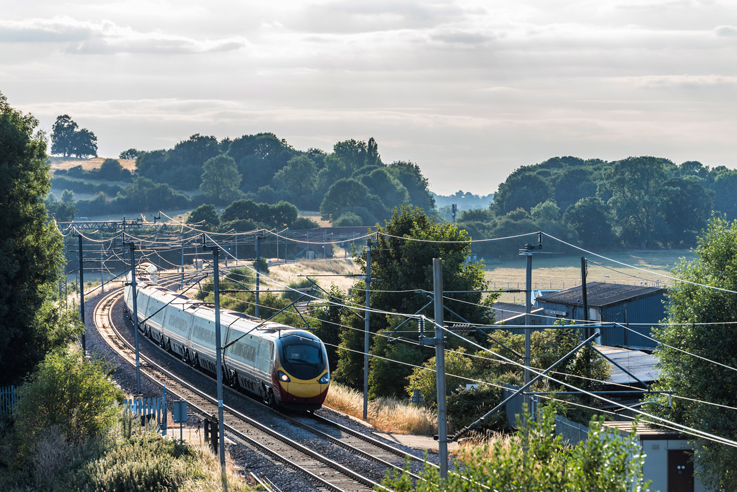
Britain’s railways do more than physically connect cities. They bring people, communities and futures together.
From employment and skills to mental health and inclusion, rail projects have the potential to deliver real, lasting social impact. But how do we capture that value? And how do we embed it into the fabric of the industry?
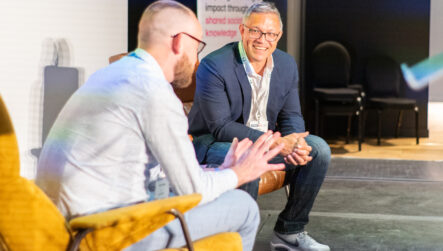
These were some of the questions explored in our latest Social Value Matters webinar. This session focused on the rail sector, with insight from Network Rail, Avanti West Coast and Rail Safety and Standards Board (RSSB), joined by ImpactOS’s own social value engagement lead, Will Campbell.
Hosted by Tom Snee, director at Cartwright, the panel explored how the sector can shift from reporting social value to realising it: operationally, strategically and culturally.
Panelists
– Elena Gonzalez, Social Value Manager, Network Rail
– Dr. Theresa Robberts, Social Value and Accessibility Manager, Avanti West Coast
– Rachel Everard, Director of Sustainability, RSSB
– Will Campbell, Social Value Engagement Lead, ImpactOS
From numbers to narratives
“It’s not just a number,” she said. “It’s the story of how we improve lives through rail.”
The role of narrative is key. When we tell stories in meaningful ways, grounded in data but led by impact, we engage hearts as well as heads. It gives stakeholders a reason to invest, teams a reason to believe in what they’re working on, and projects a sense of purpose.
A shift in mindset
Social value is no longer sitting on the fringes of the rail sector. It’s entering the mainstream. Recent government priorities have helped push it up the agenda, and we’re seeing momentum grow across the sector.
One clear example is our Rail Social Value Tool (RSVT) – the industry’s first dedicated social value measurement platform. Built by ImpactOS in partnership with the rail sector, RSVT now includes a new dashboard aligned with the Sustainable Rail Blueprint, the national framework developed by RSSB and industry partners.
This shift marks a move away from box-ticking and toward a more integrated, long-term approach. But to truly embed social value, the industry needs more than tools. It needs cultural change. That means making time for public engagement, prioritising internal training and building stakeholder confidence in the outcomes being delivered.
Accessibility at the heart
“It’s not just about getting from A to B,” she said. “It’s about combating isolation, improving mental health and creating real opportunity.”
Accessibility should influence every part of a project. From how stations are built and services are operated to how teams are recruited and communities are engaged. Done properly, it turns infrastructure into empowerment.
Making strategy actionable
With more than £10 billion allocated to rail enhancements in Labour’s Spending Review , value for money is a top priority. But as Rachel Everard of RSSB pointed out, value isn’t just about budgets. It’s about outcomes.
She explains: “There’s a real opportunity for the industry as we face this unprecedented opportunity, but with that comes a lot of scrutiny to make sure that the money being spent has a wider social environmental benefit beyond the immediate. So, there’s a real call to measure that in a thorough and robust way.”
Rachel explained how her team developed a framework within ImpactOS featuring more than 1,000 social value metrics. When these are built into the early stages of project planning, they guide better decisions and deliver stronger results for local communities.
That said, the sector still isn’t strategic enough. Social value remains less regulated than environmental considerations. That can result in it being deprioritised – but it shouldn’t be. Social value can strengthen recruitment, close the skills gap, build better partnerships and help rail become more resilient and responsive.
The good news is that tools like ImpactOS are helping to turn ambition into action. With clear, consistent data, organisations can plan more transparently, report with confidence and tell stronger stories about the value they create.
What’s holding us back?
Will Campbell noted that embedding social value from the outset creates better outcomes and stronger community support. The earlier it’s included, the more effective it becomes.
Time to make it second nature
The panel agreed: now is the time to build on the momentum. With steering groups forming, best practice being shared and tools like RSVT enabling consistent measurement, social value is growing fast. It helps teams reach further into communities and strengthens the industry from the inside out.
Turning measurement into momentum
It doesn’t just measure the positives. It helps identify where improvements need to be made. And by aligning with frameworks like the Sustainable Rail Blueprint, it helps make social value a more natural part of planning, reporting and delivery, not just something to add on at the end.
The long-term goal is simple. To make social value as embedded as safety, as instinctive as recycling and as essential as timetables. The tools exist. The ambition is there. The only thing left is to keep going.
Let’s put social value on track to become a standard part of doing business in rail, for good.
Book a free demo